Removing too much material in one operation may release internal stress, create heat, or reduce rigidity. This can cause a thin or complex component to move before finishing.
In precision VMC machining, inspection must follow the datum references specified on the drawing. These references establish how critical holes, faces and features relate to one another.
Aluminium, stainless steel and mild steel each need suitable tooling, cutting parameters and process planning to achieve the specified dimensions and surface finish.
No articles match your search. Try another word or choose All topics.
VMC machining ·
Machining sequence can directly affect the final accuracy of a component
Machining sequence can directly affect the final accuracy of a component.
Removing too much material in one operation may release internal stress, create heat, or reduce rigidity. This can cause a thin or complex component to move before finishing.
A controlled process may include:
• Establishing reliable datum surfaces
• Rough machining with suitable material allowance
• Allowing the component to stabilize when required
• Finish machining critical features
• Final dimensional inspection from the specified datums
At SS Technologies, Bengaluru, we plan VMC machining operations around the drawing, material, tolerances, and component geometry.
The selected tolerance and fit determine how two components assemble and function together:
• Clearance fit allows free movement and easy assembly
• Transition fit provides accurate location with limited clearance
• Interference fit creates a secure, press-fitted connection
Correct fit selection helps prevent looseness, misalignment, assembly difficulty, and premature wear.
At SS Technologies, Bengaluru, we manufacture custom components and fixtures through precision VMC machining based on customer drawings and specifications.
Precision deserves protection—even after machining is complete
Precision deserves protection—even after machining is complete.
A correctly machined component can still suffer scratches, dents or damaged threads if parts move or collide during transport.
Before dispatch, consider:
• Protecting critical faces, bores and threads
• Separating components to prevent contact damage
• Securing parts against movement
• Labelling part numbers, drawing revisions and quantities clearly
For corrosion-sensitive materials, suitable protection should follow the customer’s requirements.
At SS Technologies, Bengaluru, we manufacture custom components and assembly fixtures through precision VMC machining to customer drawings.
A dimension can look correct—and a component can still fail to fit
A dimension can look correct—and a component can still fail to fit.
In precision VMC machining, inspection must follow the datum references specified on the drawing. These references establish how critical holes, faces and features relate to one another.
Checking individual dimensions alone may miss an alignment or positional issue that affects assembly.
A useful review before machining:
• Identify the specified datums
• Confirm critical dimensions and geometric tolerances
• Plan workholding and inspection around those requirements
At SS Technologies, Bengaluru, we manufacture custom components and assembly fixtures to customer drawings and specifications.
A small drawing revision can make a big difference to a machined component
A small drawing revision can make a big difference to a machined component.
A changed hole position, tolerance or surface-finish requirement can affect machining, inspection and assembly fit.
Before production, make sure the manufacturing team has:
• The latest approved drawing
• A clear revision number
• Updated material and finish requirements
• Confirmation of any changed dimensions
At SS Technologies, Bengaluru, we manufacture custom components and fixtures through precision VMC machining to customer drawings and specifications.
The same component drawing can require a different machining approach when the material changes
The same component drawing can require a different machining approach when the material changes.
Aluminium, stainless steel and mild steel each need suitable tooling, cutting parameters and process planning to achieve the specified dimensions and surface finish.
Before requesting a quotation, include the exact material grade alongside your drawing, quantity and finishing requirements. This helps us review the job and quote accurately.
At SS Technologies, Bengaluru, we manufacture custom drawing-based components through precision VMC machining.
A reliable assembly process starts with a well-made fixture
A reliable assembly process starts with a well-made fixture.
Accurate locating surfaces and correctly positioned holes help components fit consistently and support repeatable assembly.
At SS Technologies, Bengaluru, we manufacture custom fixtures and drawing-based components through precision VMC machining in aluminium, stainless steel and mild steel.
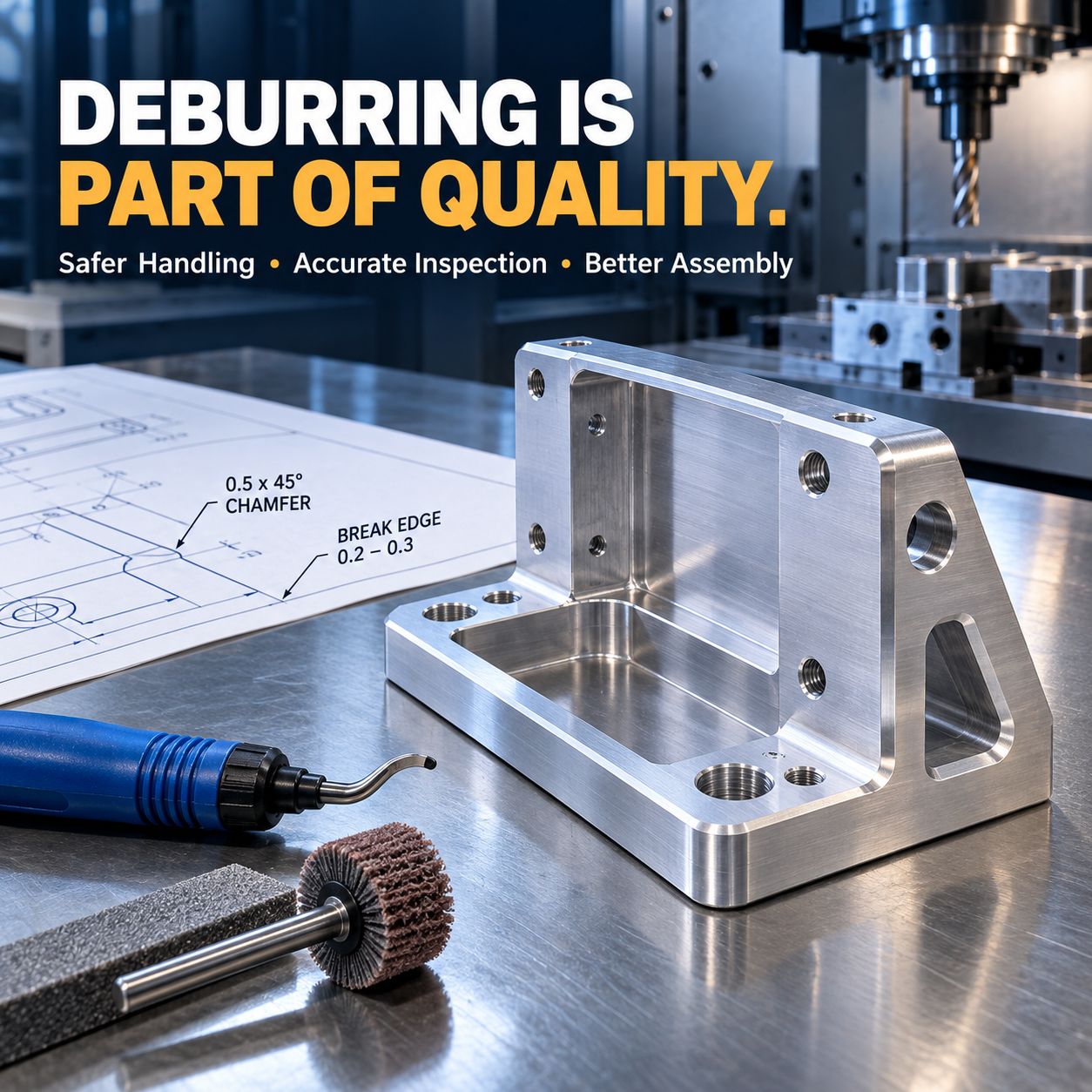
Burrs and uncontrolled sharp edges can affect safe component handling, dimensional inspection, assembly fit and alignment, surface treatment results and overall component quality.
Proper deburring must remove unwanted material without changing critical dimensions or specified edge conditions. Chamfers, edge breaks, holes, pockets and intersecting features should be checked before final inspection and packing.
At SS Technologies, edge finishing is considered an essential part of the machining and inspection process.
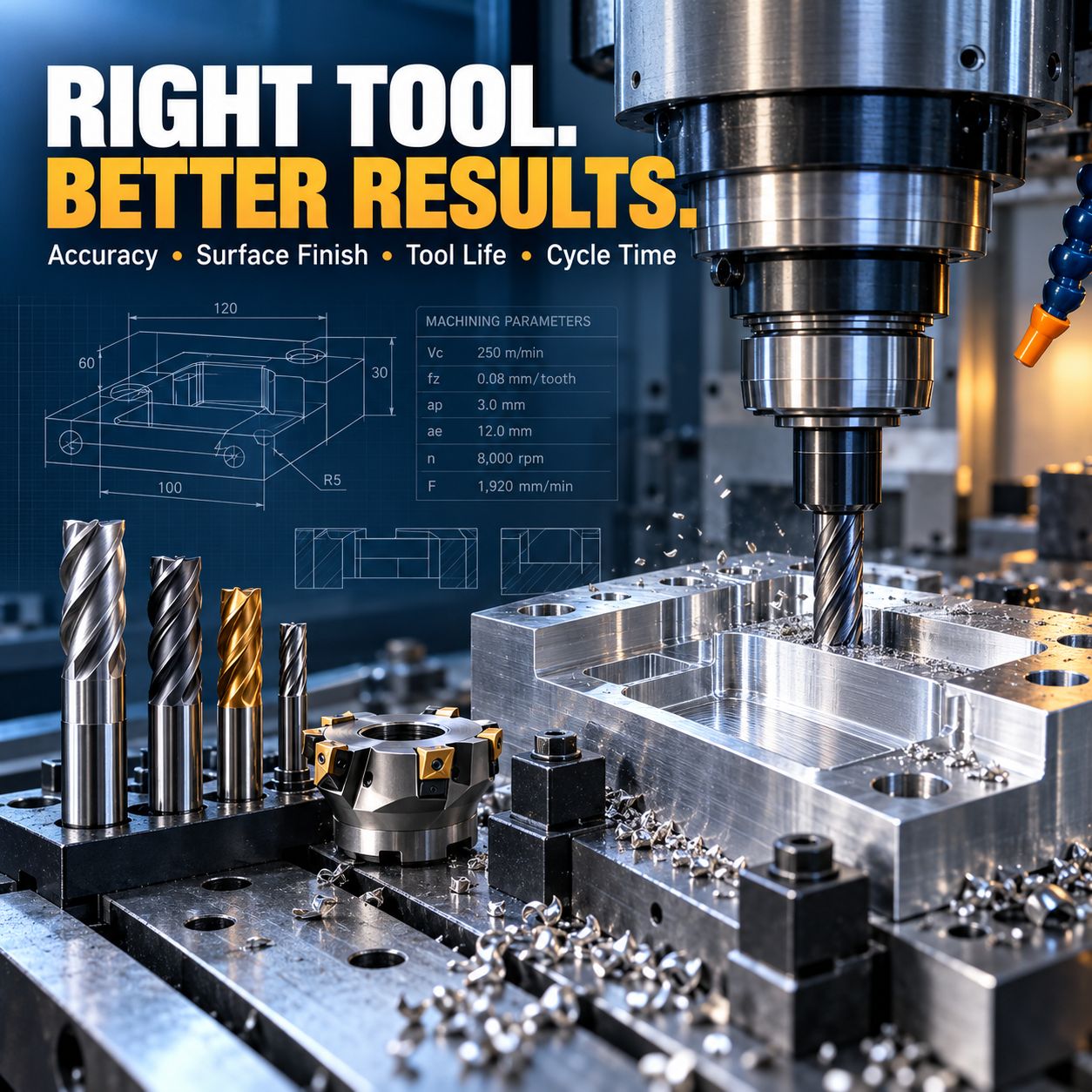
The right cutting tool makes a measurable difference
Tool material, geometry, coating, diameter and cutting parameters must match the workpiece and operation.
Correct tool selection helps maintain dimensional accuracy, improve surface finish, reduce vibration and chatter, control heat and tool wear, and support consistent cycle times.
At SS Technologies, tooling and process planning begin with the component drawing, material and tolerance requirements.
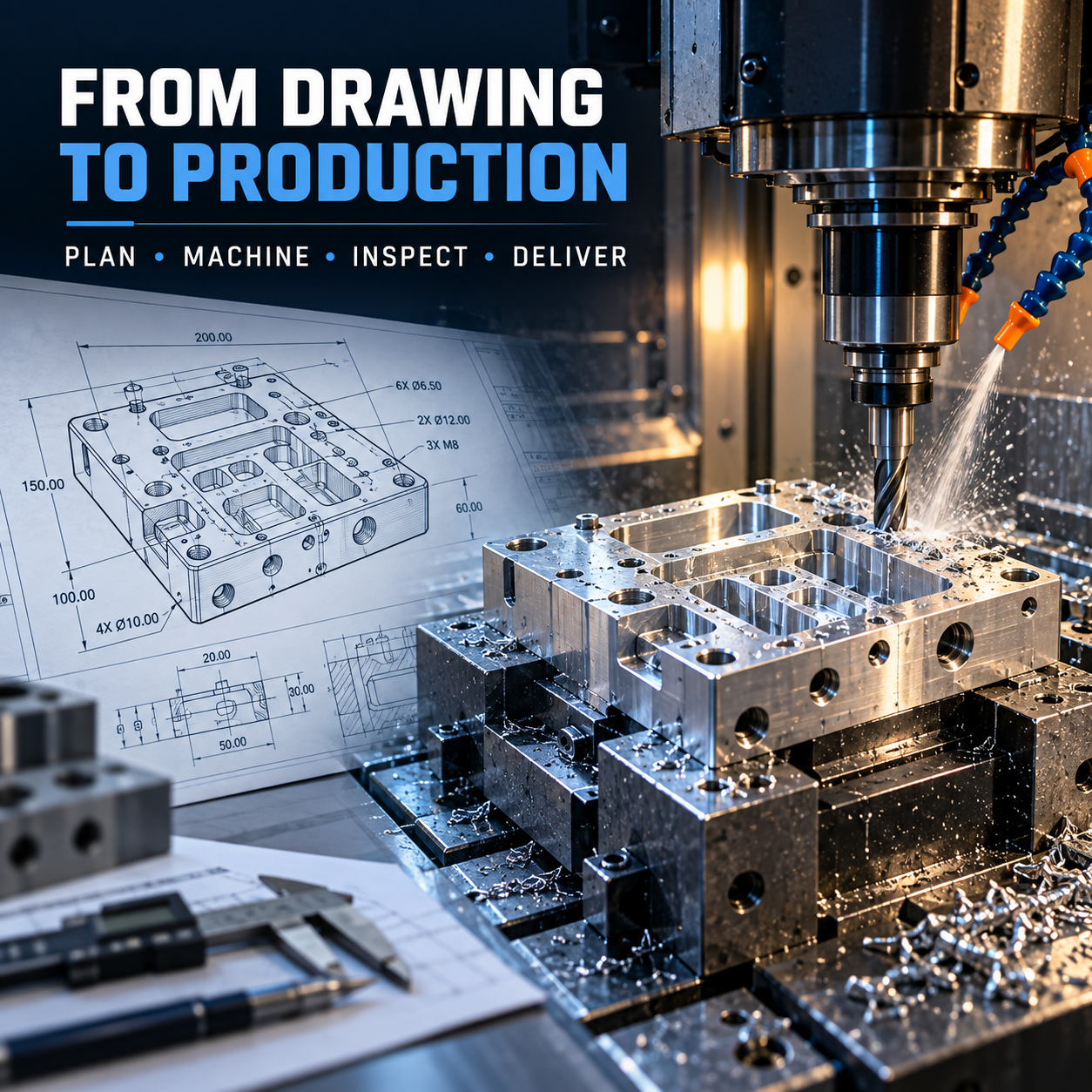
From a clear drawing to a practical manufacturing plan
A good machined component starts with a clear drawing and a practical manufacturing plan.
Before production, we review material specifications, critical dimensions and tolerances, machining feasibility, surface finish requirements, inspection points, required quantity and delivery schedule.
Early technical review helps reduce delays, avoid rework and maintain consistent quality. SS Technologies supports CNC and VMC machining requirements for prototypes and batch production from customer drawings.
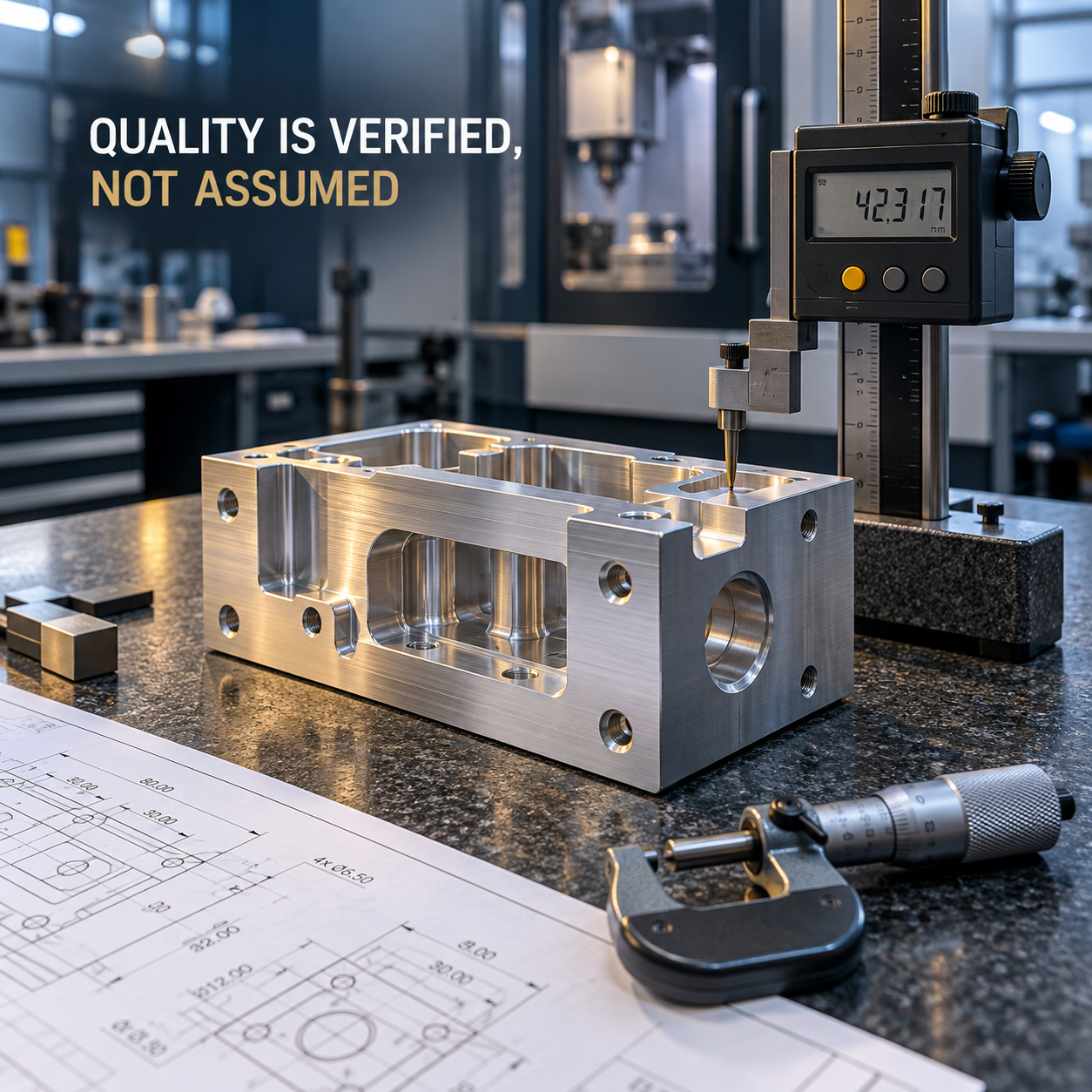
Before dispatch, critical dimensions must be checked against the customer drawing and specified tolerances.
An effective inspection process considers drawing datums and reference surfaces, critical dimensions and tolerances, suitable measuring instruments, surface finish requirements, inspection records and traceability, and final visual checks before packing.
Careful inspection helps identify deviations early and supports consistent quality across prototype and batch requirements. At SS Technologies, machining and inspection planning begin with the customer’s drawing and specifications.